What’s the short answer?
- There's no measured half-life for texting, real conversations follow a wide, unpredictable range of lengths and gaps.
- In the Oxford data, about half of all conversations never got a reply, and conversations that led to a phone-number exchange were much longer than those that didn't.
- 75% of Hinge daters expect a follow-up the same day or next day after a date, that's the practical normal window, not a fixed rule.
- Texting the morning after (a moderate pause) beat both instant texts and two-day waits for relationship intentions.
- A follow-up within a day or two of a date is in line with what most Hinge daters expect, not a sign of desperation.
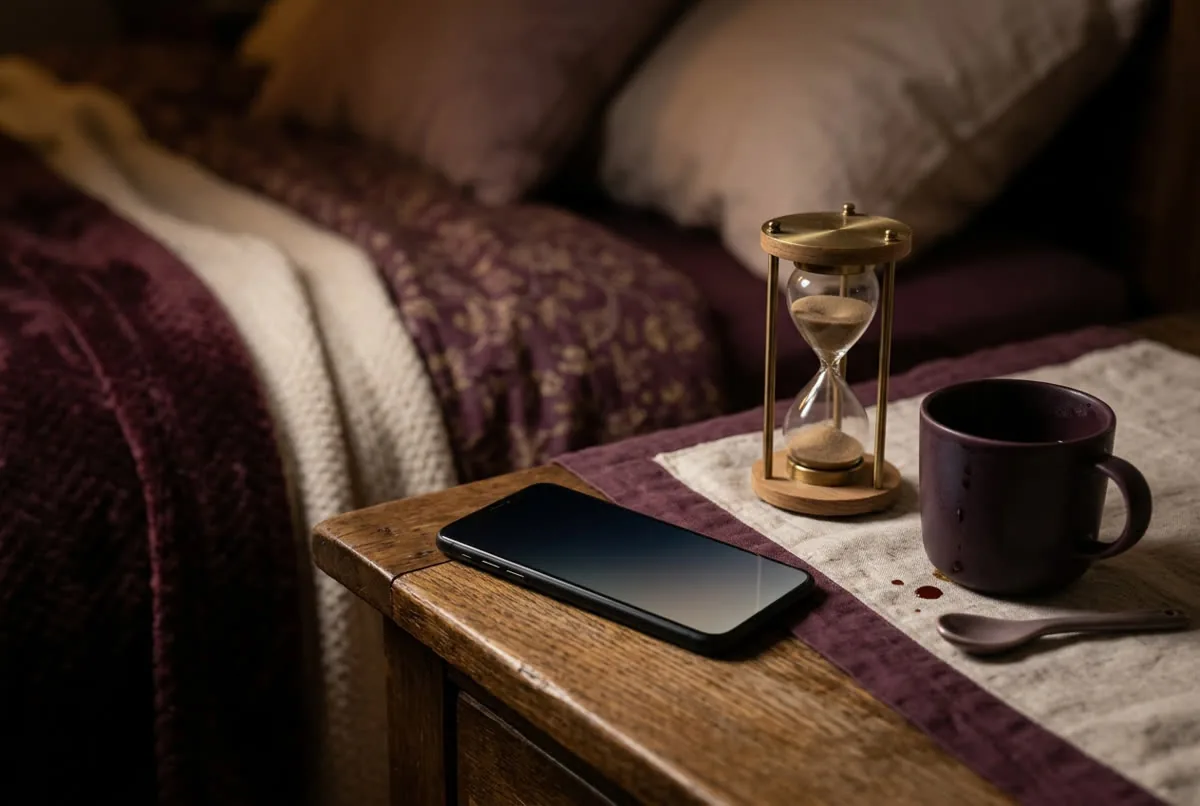
You sent something normal three hours ago and the bubble hasn’t moved since. You know he’s seen his phone today, probably more than once, and now you’re doing the math: is this a normal lull, or is this the conversation quietly dying in your hand.
The short answer: There’s no scientific “half-life” that tells you exactly when a text conversation is dead. Large-scale research on real conversations shows gaps and lengths vary too widely for one fixed rule, but it does point to a practical window: most daters surveyed by Hinge expect a follow-up the same day or the next day after a date, and a message inside that window reads as normal, not needy.
Why there’s no real “half-life” for a text conversation
The idea of a half-life borrows from physics: a fixed rate at which something decays by exactly half, over and over, on schedule. It’s a tidy metaphor for texting, but it isn’t backed by actual data. When researchers at the Oxford Internet Institute analyzed roughly 2 million dating-app conversations across 19 million messages and 400,000 users, they found that conversation length, the wait time between replies, and message length all follow what statisticians call a “fat-tailed” distribution (Oxford Internet Institute (arXiv), 2016). In plain terms, most conversations are short, but a meaningful share run very long, so no single rate describes them all.
There’s no clock counting down to a universal expiration point. Some exchanges are essentially over after two messages. Others survive gaps that would look “dead” by any half-life math and pick back up anyway. A three-hour silence isn’t evidence of anything on its own. It’s the pattern around it, and what happens next, that tells you more than the gap itself.
It’s easy to see why a “half-life” idea is appealing in the first place. Waiting on a reply feels formless, so a fixed rule sounds like relief: a number you could point to and know, for certain, whether to keep hoping or move on. The actual data doesn’t offer that kind of certainty, and pretending it does just swaps real uncertainty for a fake one.
How do you know when a text conversation is actually over
The same Oxford dataset looked at which conversations turned into something real, meaning a phone number exchange, and found that those “successful” conversations were far longer than the rest, with a median of 23 messages versus 6 for unsuccessful ones (Oxford Internet Institute (arXiv), 2016). A stall doesn’t mean a conversation is automatically finished, but the pattern while it’s live is more telling than any single gap: quick replies, questions coming back your way, and some initiative from him, not just polite one-word answers.
The same research found men initiate about 79% of conversations, and roughly half of first messages never get a reply at all (Oxford Internet Institute (arXiv), 2016). Conversations that stall before they really start are common enough to be the norm, not a referendum on you specifically. A conversation is “actually over” less because there was a gap, and more because the pattern that built it (mutual initiative, matched effort) has quietly stopped on his end and doesn’t come back even after you’ve given it room.
Signs it’s a normal lull
He was replying with some effort and some questions of his own before the gap. The gap itself is still inside a day or so. Nothing else about the exchange changed, meaning no one-word answers, no dropped enthusiasm, right before it went quiet.
Signs the pattern has actually stopped
His replies had already been shrinking, in length or in effort, before the silence started. The gap has stretched well past a day or two with no acknowledgment at all. You’ve given it normal room and nothing has come back on its own.
For more on reading his side of a stalling exchange, see He’s Losing Interest Over Text? What to Do Next.
What’s a normal gap between texts before it’s dead
If you want a number to hold onto, this is the closest thing the research gives you. Hinge’s survey of its daters found that 75% expect a follow-up message either the same day or the next day after a date (Hinge, 2025). That’s the window where a pause still reads as a normal, busy life, not disinterest. It’s a post-date benchmark, so treat it as a rough guide for a mid-conversation lull. Once you’re well past next-day with zero acknowledgment, not even a delayed one-liner, it stops matching what most of those daters expect.
Timing also shapes how a reply lands, not just whether it comes. A study in the Journal of Social and Personal Relationships tested the timing of texting after a first date and found a curvilinear effect: texting the next morning (a deliberate, moderate pause, not instant and not two full days) produced the highest relationship intentions, higher than texting right away or waiting two days (SAGE Journals, 2025). A short, intentional gap isn’t a red flag on either side of a conversation. In that study, it was the timing that worked best.
Notice what that curve actually shows: both extremes underperformed. Texting isn’t a race where earlier always wins, and going quiet for two full days didn’t pay off either. The next-morning middle ground is where the study found relationship intentions peaked.
How many days of silence means someone lost interest
There’s no research-backed day count that flips a switch from “he’s busy” to “he’s gone.” What the data does give you is a range to compare against: most Hinge daters expect a follow-up after a date within a same-day-to-next-day window (Hinge, 2025). A gap of a few hours, even a full day, sits inside normal life circumstances: work, sleep, a rough week. What’s worth paying attention to isn’t a specific number of days, it’s whether the pattern that existed before, him initiating sometimes, matching your effort, asking things back, has disappeared and stays gone even after you’ve given the conversation normal room to breathe.
Trying to pin an exact day count onto someone else’s inbox habits will make you crazier than the silence itself. Use the window above as a general compass, not a countdown clock.
This is also where self-worth quietly gets tangled up in the math. Counting hours can start to feel like counting your own value, as if the right number of days would prove something about you rather than about his week. It doesn’t. A gap in replies is information about a conversation, at most, and treating it as a verdict on you personally is a heavier conclusion than the data actually supports.
Is it worth trying to revive a conversation that went quiet
More often than the fear tells you, yes. The instinct a lot of women have here is that texting first again, especially after he went quiet, will look desperate. The research doesn’t show that. Hinge found 75% of its daters expect a follow-up message the same day or the next day after a date, which suggests a well-timed message reads as normal follow-through, not neediness (Hinge, 2025).
Timing still matters. A revival attempt made within a day or two of the pause stays inside that same-day-to-next-day window, while one sent a week later is trying to restart something that’s gone cold.
If it’s been under 48 hours
This is close to the window most Hinge daters consider normal for a post-date follow-up (Hinge, 2025). A simple, low-key message about something real, your day, a thought, a question, does the job. You don’t need to reference the gap or explain yourself. You can’t make him reply. You can make replying the easy, obvious thing to do by keeping your own message light and pressure-free.
If it’s been longer than a week
Referencing the silence directly (“sorry it’s been a while”) can spotlight the very thing you’re trying to move past. A genuinely fresh message, tied to something new rather than to the old thread, may land better than a follow-up on a conversation that’s gone cold. For a step-by-step approach to exactly this moment, How to Restart a Dead Text Conversation (7 Steps) walks through what to send and when.
If texting isn’t your natural strength and you’d rather have phrases ready before you need them than composing something under pressure, that’s the gap a resource like Irresistible Texts is built to close, worth a look if this keeps being a pattern rather than a one-time thing.
The bottom line for your next text
Skip the mental math about half-lives and decay rates. Look at the actual pattern instead: how the two of you were texting before the gap, whether that pattern has genuinely stopped instead of just slowed, and whether you’re still inside the same-day-to-next-day window most Hinge daters consider normal. If you are, a simple, low-pressure message is well within what’s expected, not a risk.
If the pattern has been gone for a while with nothing coming back even after you’ve given it room, that’s information too, and it’s kinder to yourself to read it as information rather than a verdict you have to keep re-litigating. Send the light, low-pressure message if you’re still inside the normal window. If you’re not, let the silence be the answer it’s already giving you, and put your attention toward a conversation that’s actually meeting you halfway instead of spending another night writing a courtroom drama your phone can’t actually testify to.
Frequently Asked Questions
- Is there an actual scientific half-life for text conversations?
- No established half-life exists. A large-scale study of about 2 million dating-app conversations found that conversation length, reply waiting times, and message length all follow wide, fat-tailed distributions, which suggests they vary too much for any single number to mark when a conversation is dead (Oxford Internet Institute (arXiv), Zhang & Yasseri, 2016).
- How long should I wait before texting him again after no reply?
- Research on post-date texting found a curvilinear effect where texting the next morning, a deliberate but moderate pause, produced the highest relationship intentions, more than texting immediately or waiting two full days (Journal of Social and Personal Relationships, SAGE, 2025). Hinge's survey also found 75% of its daters expect a follow-up the same day or the next day after a date (Hinge, 2025). Both findings are about the first message after a date, not a stalled conversation.
- Does texting first again make me look desperate?
- The data doesn't show that. Hinge's survey found 75% of its daters expect a follow-up message the same day or the next day after a date, so a message within that window is in line with what most of them expect (Hinge, 2025). That survey covers post-date follow-ups, not mid-conversation lulls.
- Why do so many text conversations just fade instead of ending clearly?
- The same Oxford study found men initiate about 79% of conversations and roughly half of first messages never get a reply at all, so conversations stalling early is common enough to be the norm rather than a signal specific to any one exchange (Oxford Internet Institute (arXiv), Zhang & Yasseri, 2016).
Sources & references
Before you go
The 3 Texts That Break a Dead Silence
Three word-for-word texts that restart a gone-quiet conversation without chasing or pressure — free, straight to your inbox. No spam, unsubscribe anytime.
Free guide
The 3 Texts That Break a Dead Silence
Three word-for-word texts that restart a gone-quiet conversation without chasing or pressure — free, straight to your inbox. No spam, unsubscribe anytime.